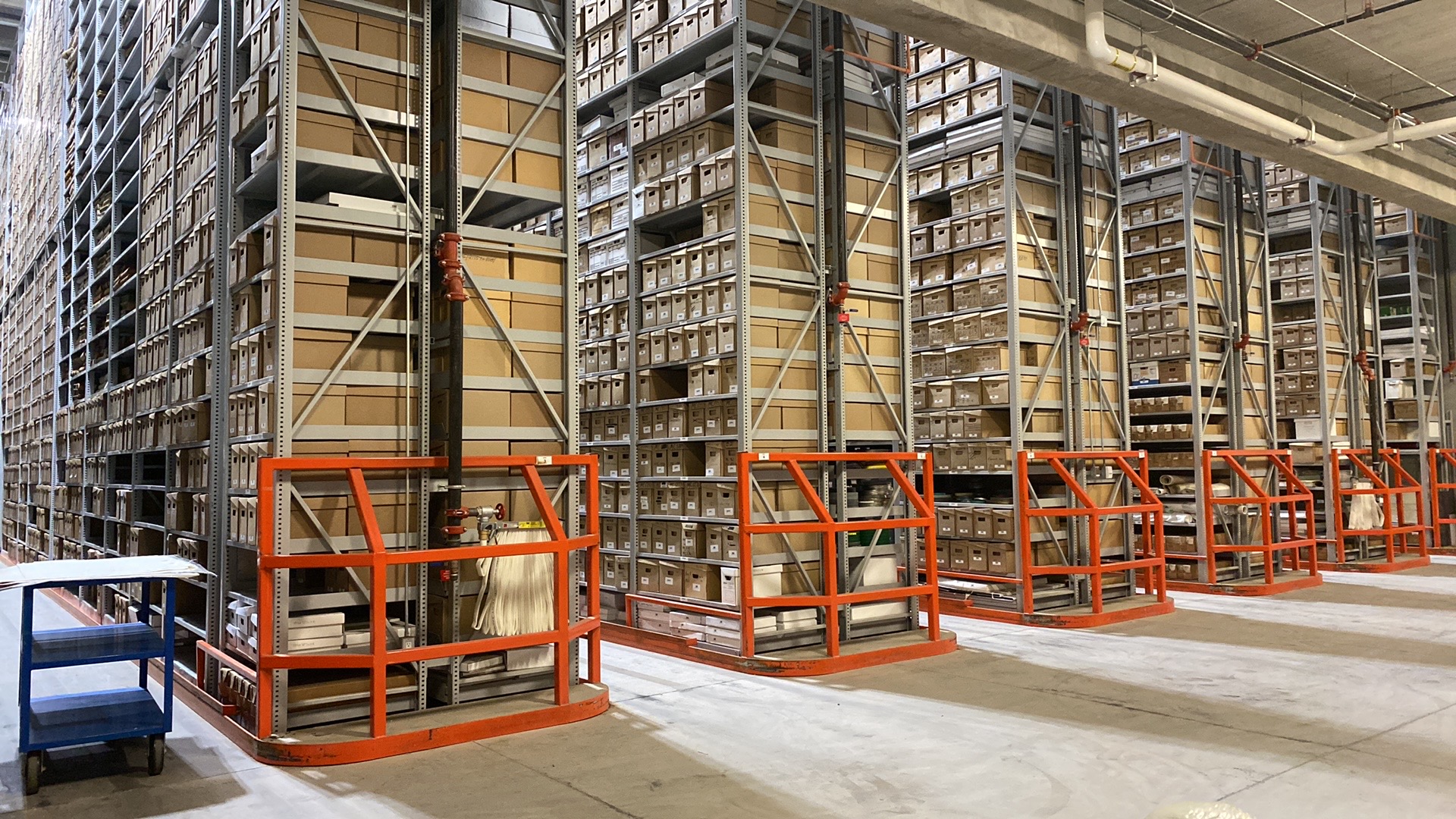
Identifying and addressing critical issues within the existing system at the PANB and implementing effective solutions to enhance overall functionality and user experience.
Sector
Government Archives
Client
Provincial Archives of New Brunswick, Government of New Brunswick
Tools
Excel, in-house archiving software, handheld scanner
My Role
I developed an information systems evaluation plan, analyzed the cartographic records system, identified problems, ideated solutions, and implemented the solutions when feasible.
Provincial Archives of New Brunswick
The Provincial Archives of New Brunswick (PANB), established in 1967, is a government institution responsible for the preservation, management, and dissemination of the province’s historical records. Under provincial legislation, the PANB has a responsibility to assemble, and to make available for research, records bearing upon the history of New Brunswick.
Project Background
The PANB aimed to make inventory of the cartographic records to ensure which records are known, available, and accessible to researchers.
Discovery Research
In-depth discovery was needed to understand the complex processes and data:
- The Manager of the Special Media Unit and the Manager of the Cartographic Records walked me through the existing process to find a cartographic record.
- A comparative analysis helped me understand what was working and not working with cartographic record keeping at other government archives.
- Mapping the process made me realize how confusing the existing processes are and helped me see how I could streamline the data.
- I retrieved all of the physical and digital lists I could find that would point to where certain cartographic records lived in the repository, and consulted with the managers.
Challenges
- Undocumented Records: Some cartographic records lacked proper location documentation, with their whereabouts known only to a single manager. This created a risk in the event of staff changes.
- Inconsistent Finding Aids: The quality and availability of finding aids were inconsistent, complicating the retrieval of specific cartographic records.
- Failing Stickers: Identification stickers often fell off due to being incompatible with the environmental conditions in the repository, making it harder to locate records.
- Confusing Software System: The in-house software used for managing digital finding aids had usability issues, impacting its effectiveness for record retrieval.
- No Digital Check-In/Check-Out Process: Relying on a paper-based retrieval system made it difficult to track the status of records. This led to inefficiencies, record loss, and a lack of accurate updates.
Design
I ideated based off of the findings from the discovery research, consulted with managers, and moved forward with the most impactful X feasible solutions.
- Centralized Knowledge: I compiled all finding aids, documentation, and informal knowledge into a single, accessible repository.
- Digital Transformation: Cartographic records were input into the existing software system, improving accessibility, organization, and retrieval speed.
- Durable Labeling: Removed failing stickers and used pencil markings directly on the margins of records for long-lasting identification.
Limitations
- User Research and Testing: At the time, I lacked the resources for thorough user research and formal usability testing, relying mainly on feedback from coworkers and supervisors.
- Software Updates: I did not have the authority or expertise to push for software changes, as user experience was not a priority for the institution at that time.
Comprehensive Evaluation Plan
After completing a graduate-level course Information Systems, Services, and Design, I created a comprehensive evaluation plan for the PANB’s cartographic records system. This plan outlines strategies for improving system usability, efficiency, and overall performance.
Provincial Archives of New Brunswick Evaluation Plan
Takeaways
This project was the catalyst for me pursuing a Master of Information specializing in User Experience Design because it underscored the importance of deeply understanding users’ needs and perspectives when crafting effective systems.
Thank you for reading!