Transforming how the Greater Toronto Eritrean Canadian Community Centre connects with its members by creating a centralized, accessible, and resourceful website: gteccc.ca
Sector
Community Nonprofit
Client
Greater Toronto Eritrean Canadian Community Centre (GTECCC)
Team
Fahma Mohamed (UX), Olya Jaworsky (UX), Siti Lei (UX), Nadia Mariyan Smith (UX)
Tools
Figma, Miro, Google Suite (Drive, Excel, Docs, Forms)
My Role
I took on project management responsibilities to ensure the success of the project such as creating project plans, organizing and facilitating meetings, setting agendas, managing our Miro and Figma workspaces, and developing and handing off all documents so the client was supported in their next steps.
I also co-led the research and design phases and participated in all research and design activities and outputs.
The Greater Toronto Eritrean Canadian Community Centre
The Greater Toronto Eritrean Canadian Community Centre (GTECCC) has been a cornerstone for Eritrean-Canadians in Ontario, ensuring support for vulnerable populations such as newcomers, refugees, youth, and seniors.
Project Background
GTECCC has engaged our team of UX designers to design GTECCC’s first website. The goal of the website is to ensure important resources reach users effectively and efficiently, as well as to establish better public legitimacy as an organization. Further goals have been revealed through user research.
Discovery Research
In-depth discovery research was needed to understand the current service, user needs and desires, and community centre best practices.
- GTECCC Board Members walked us through the current services and offerings at GTECCC.
- A deep dive into the history of Eritrea and its diaspora in Canada and Toronto helped us to understand the needs of the community.
- A comparative analysis helped us understand what was working and not working on other community centre websites.
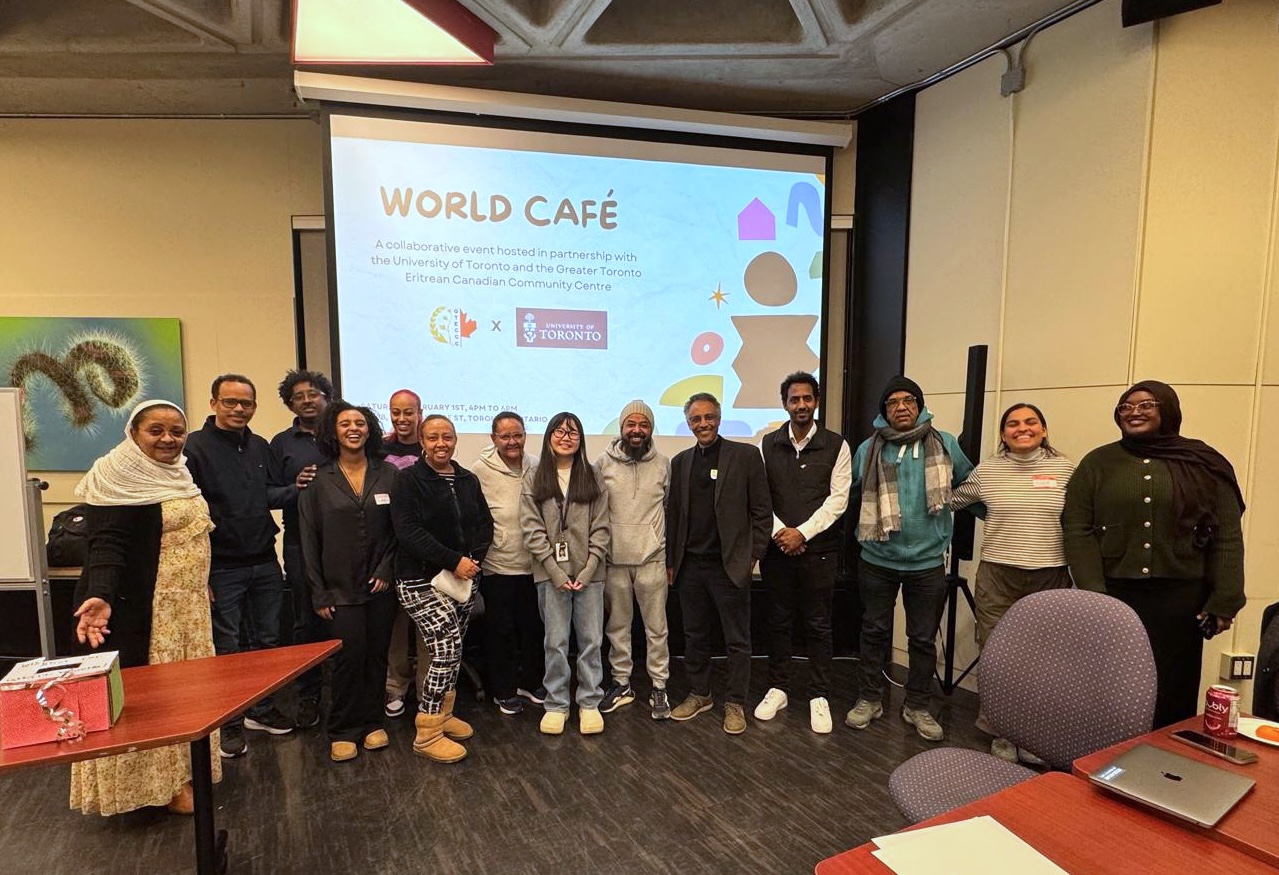
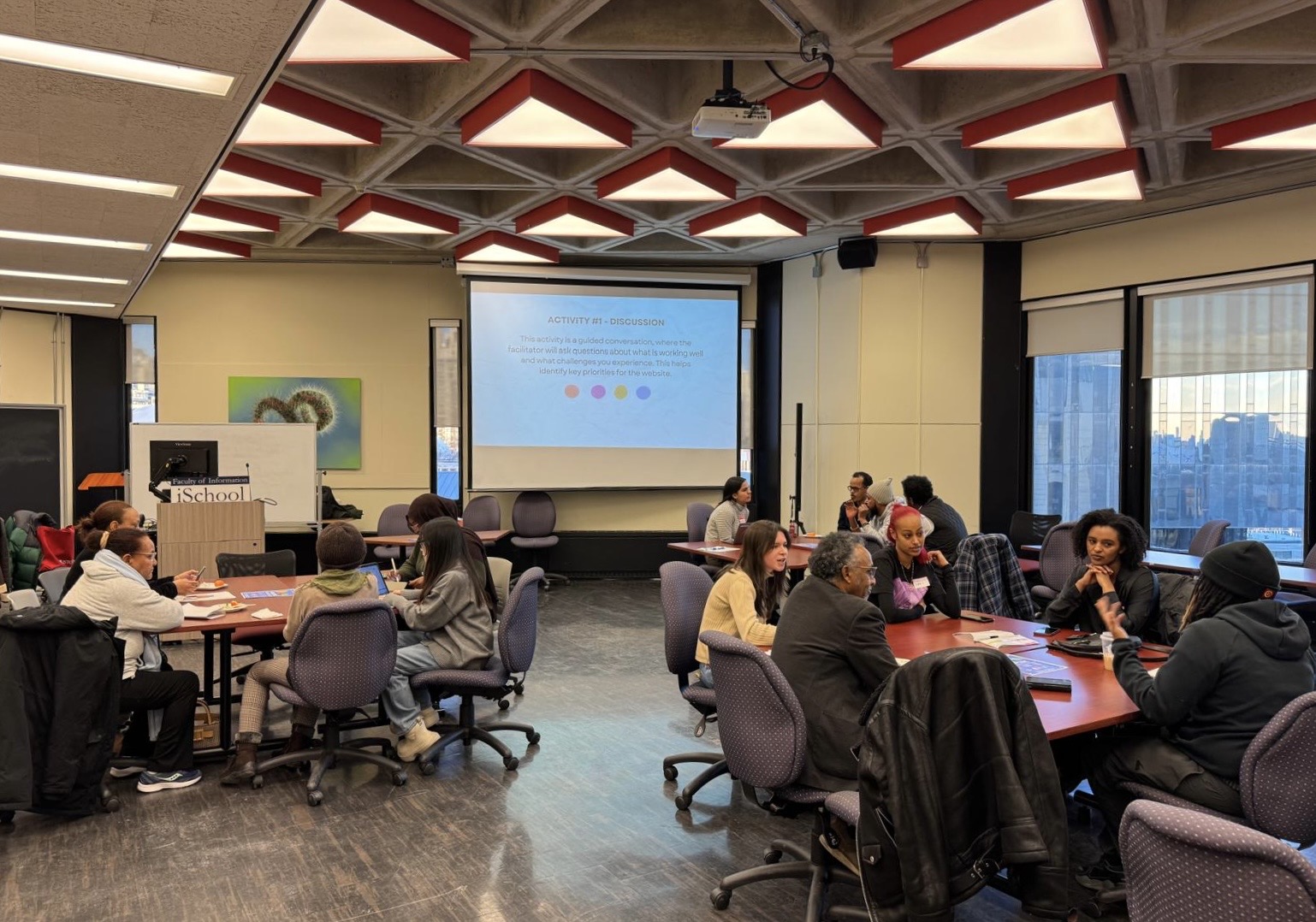
- We confucted a participatory research approach, using the World Café method to gather insights from community members. We facilitated discussions, card-sorting activities, and drawing sessions, engaging all types of members including newcomers, seniors, youth, and board members.
Challenges
- Information is currently sent through Facebook and WhatsApp, which not all members enjoy or are familiar using. Without a centralized source of truth, important information can easily get lost or misunderstood.
- GTECCC faces challenges with spam posting on their Facebook and Whatsapp groups which burdens other users and distracts from important resources that GTECCC shares in these groups.
- Newcomers and youth are experiencing mental health challenges, and have expressed a need for holistic/comprehensive support that factors in social integration, employment, language barriers, stigma, and access to education and training.
- Younger members feel disconnected from GTECCC programming, perceiving it to be more suited for the older members of the community. In contrast, the older generation want younger members to actively participate within the community, but struggle with fostering that participation.
- Members mentioned the importance of feeling included in the decision-making and planning for GTECCC initiatives, particularly in the distribution of finances. They expressed a need for transparency and record-keeping in order to foster participation and inclusion.
- GTECCC’s members include Eritrean immigrants, Canadian-born Eritreans, newcomers and more. While newcomers struggle to adjust to culture shock, entering the workforce, language barriers and connecting with the community, Canadian-born Eritreans struggle to connect to their Eritrean culture in meaningful ways.
- Many community members have limited digital literacy.
Design
We ideated based off of the findings from the discovery research and moved forward with the most impactful x feasible solutions.
Goals of the Prototype
- Comprehensive Resource Guides: Feature a robust set of resource guides, with a particular focus on the Newcomers Guide, helping individuals navigate settlement, employment, healthcare, education, and more. These guides will serve as a permanent, one-stop hub for essential information, making it easier for community members to access support.
- Purpose Driven Integration: Complement, rather than replace, existing communication tools. WhatsApp remains the space for real-time updates and conversations, Facebook is used for broader outreach and community engagement, while the website serves as a structured, permanent home for resources, events, and official information.
- Feedback Form: Dedicate a space to allow users to share feedback anonymously about GTECCC services. This fosters honest community input, helping the organization continuously improve its programs and better serve its members.
- Community Articles and Storytelling: Integrate a community blog where members can submit stories, insights, and experiences. This helps strengthen community ties, highlight achievements, and showcase the diverse voices within GTECCC.
- Mentorship Programs: Integrate a mentorship program with its own page, sign-up forms for both mentees and mentors, and advertise it throughout the site (e.g. on the homepage and on the resource pages).
Usability Testing
We conducted usability testing with members of the GTECCC community. These sessions allowed us to validate our design decisions, identify pain points, and uncover areas for improvement. Participants shared their thoughts on navigation, accessibility, and the clarity of information presented on the prototype.
Key takeaways
- Participants understood that community written articles would be located under the news section.
- The ability to give feedback at the bottom of the resource guide pages was received well.
- Participants all cited different pages they would like the CTA on the homepage to go to. We decided to change the button to go to the resource page because the primary goal of the website is to showcase available resources within the GTA.
- Some participants did not realize that there was more content below the fold. We redesigned the pages to ensure it was apparent that there was more content below the fold.
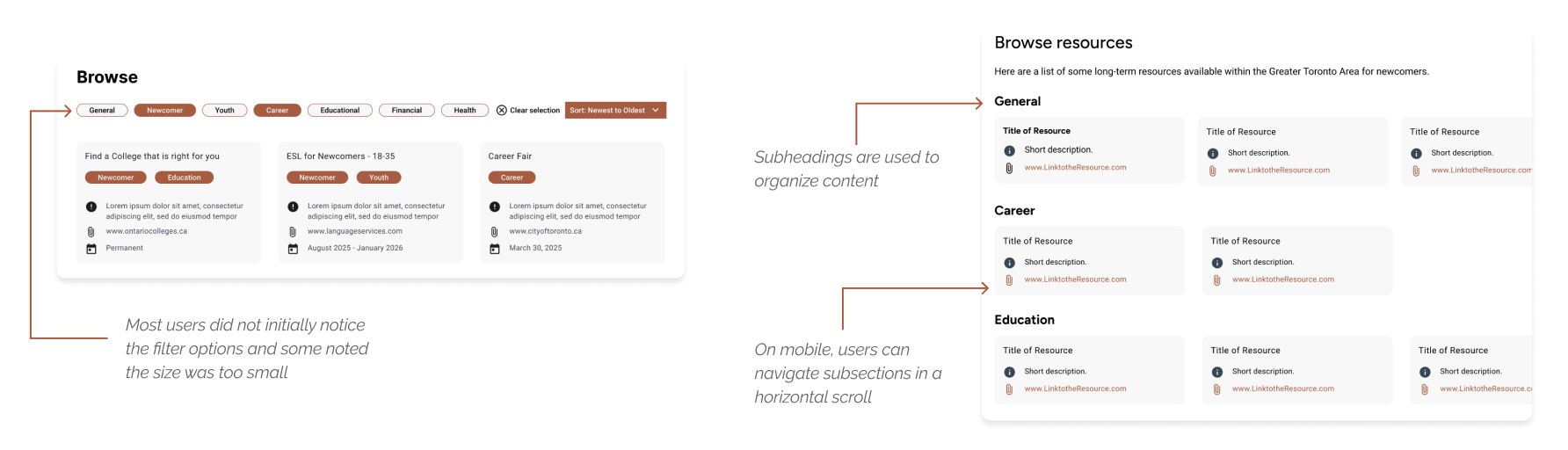
- Filter options were used to select for specific types of resources. Users found them either too small or did not notice them. We removed the filters and organized resources by headings, implemented horizontal scroll for cards in each subsections, removed dates in the cards, and only kept permanently available resources as GTECCC was not going to update the resources regularly.
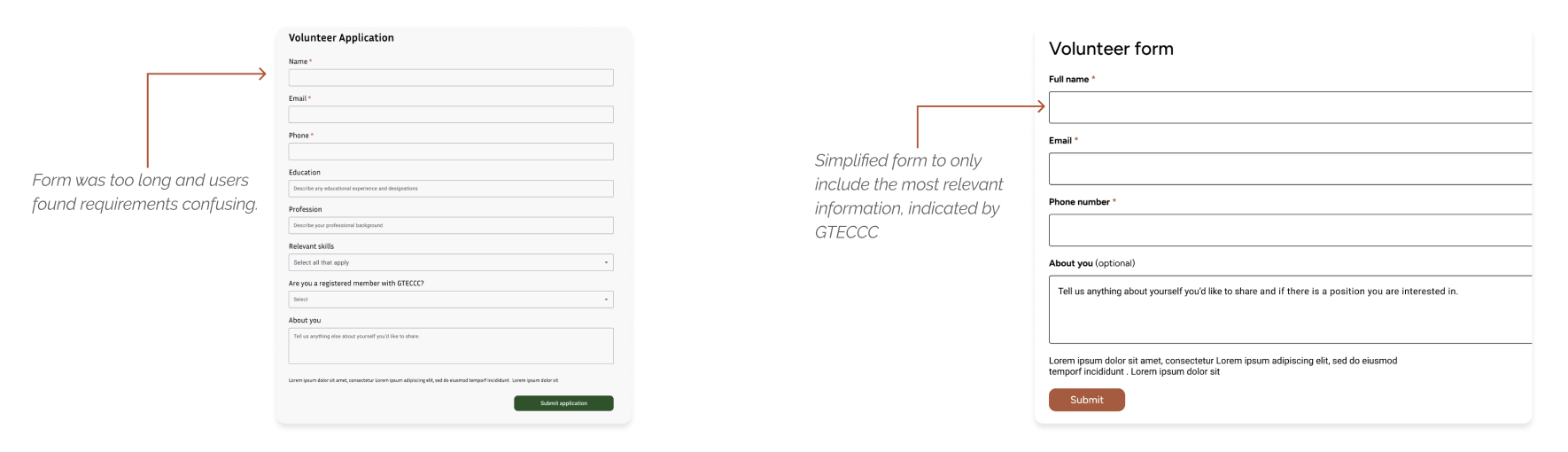
- Users found the requirements on the various forms confusing and long, leading to paticipants wanting to drop-out of the process. We simplified the forms to only ask relevant and important information.
Final Design
Watch our final proposed design video on Vimeo.
Supporting implementation
To help GTECCC move forward with the website development and content creation, I provided several resources and recommendations.
- Outlined six approaches to website development, including vetted web developers, Canada Summer Jobs and UofT Workstudy positions, and alternative sources of developer talent.
- Conducted a comparative analysis of website builders, highlighting the pros and cons of each option and offering tailored recommendations.
- Created a comprehensive Google Docs template that included English drafts of each page, structured formatting, and a dedicated column for Tigrinya translations. This template served as a guide for the community to develop and maintain content on their own.
Takeaways
- Benefits and challenges of conducting user research: In-person sessions were more effective at engaging participants and resolving translation difficulties. Remote sessions sometimes resulted in participants being unable to continue due to technical issues that we couldn’t troubleshoot from a distance. This reinforced the importance of in-person engagement, especially when working with community members where English is their second or third language or who may have limited access to or experience with digital tools.
- Importance of setting up team roles: Since this project was conducted as part of our capstone project for school, team roles were not evident from the onset. We were all UX students looking to refine our skills in every part of the research and design process. This often made the project go at a slower pace than it might in a workplace, where roles are more defined and separate. The need to set up roles was crucial for the completion of this project.
Thank you for reading!